

Cognitive barriers affect a wide range of people
Cognitive disabilities are the most common disabilities globally. According to the CDC, 14% of adults have a cognitive disability in the United States (Source: CDC). Cognitive barriers can make products harder to use for anyone dealing with issues of memory, reading and writing, or focus. These can include:
Designing for cognitive accessibility can improve your product experience for a massive group of people, especially as the population ages.
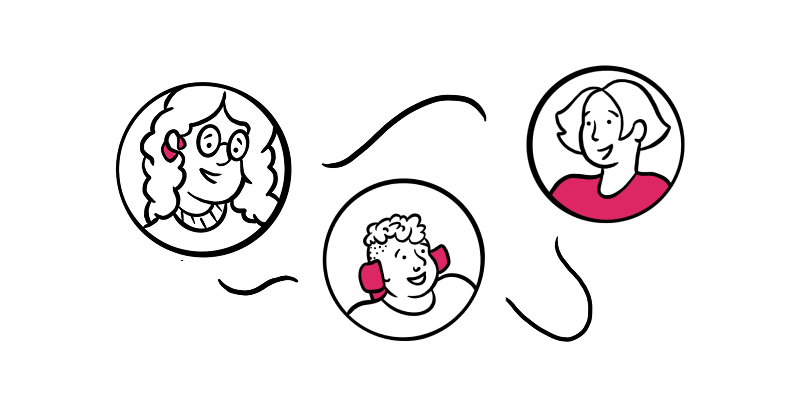
Meet Leanna and Meryl, two Fable Community members who have cognitive access needs.
Common UX design practices create cognitive friction
Dense information, unpredictable flows, a lack of context, and visually noisy interfaces all create cognitive barriers. Small frictions build up, digital tasks feel overwhelming, and users go looking for an experience that feels easier.
Ignoring people’s cognitive needs directly impacts the usability and adoption of your digital products.
Cognitive research surfaces what automated testing can’t
Usability insights from humans with cognitive access needs are invaluable when your product flows demand attention, interpretation, or memory.
Human feedback shows where real people struggle to understand, remember, and make decisions.
Benefits multiply when you reduce cognitive friction
Strengthening cognitive accessibility improves usability for all and future proofs your products.

Expand your reach
Meet rising demand for cognitive accessibility. Deliver intuitive, usable experiences to the largest disability segment and the aging population.

Create lasting advantage
Build a consistent, repeatable process that aligns UX, product, and engineering teams. Improve user experience for all with direct feedback from verified testers.

Reduce risk, cost and rework
Catch issues earlier, avoid late-stage rework and penalties. Anticipate widening legal requirements by aligning with WCAG 2.1 / 2.2 cognitive criteria using real-user evidence.
Get 2x the insights, faster, with Fable
Fable turns a historically hard-to-reach audience into a reliable research engine. Engaging Fable’s Community of cognitive testers uncovers subtle usability gaps that general research participants can miss.
1. Access a pre-vetted, on-demand panel of people with cognitive accessibility needs related to focus, memory, and reading and writing
2. Take advantage of standardized, repeatable research methods and expert-led guidance that lets you act confidently.
3. Surface deeper UX issues earlier and see exactly where cognitive testers thrive and struggle using your products.
4. Use the Cognitive AUS (Accessibility Usability Scale) to score and benchmark your progress over time.
“Two sessions with cognitive users feels like two hundred because of the volume of insights we get.”

UX Researcher
Bell Media
“Two sessions with cognitive users feels like two hundred because of the volume of insights we get.”
UX Manager
Bell Media
Prioritizing cognitive needs over medical diagnoses
Fable takes a need-based approach to cognitive accessibility. This allows research and product teams to connect with testers who self-identify with requiring support in three key areas.
Dig deeper: Explore five small changes you can implement to make UX research more effective and inclusive for cognitive testers.
Memory support
Challenges with recalling information, navigating multi-step tasks, or remembering pathways.
Reading and writing support
Difficulties understanding dense content, interpreting unfamiliar terminology, or completing written communication.
Focus support
Challenges maintaining attention, filtering distractions, or working with visually or auditorily busy interfaces
Access a vetted, reliable, professional testing community
Fable’s trusted community of people with disabilities helps companies create accessible and usable digital experiences. Members represent a wide range of lived experiences, including those with vision, mobility, and cognitive accessibility needs.
Dig deeper: Learn more about Fable’s Community

“The cognitive audience was a great addition to the other accommodations we test with Fable today. Insights on access needs for focus, reading, and writing really help us improve UX for everyone and propel us toward our vision – not just accessible design, but inclusive design.”

Jared Becker
Digital Product Lead, Accessibility at Nestlé Purina
“The cognitive audience was a great addition to the other accommodations we test with Fable today. Insights on access needs for focus, reading, and writing really help us improve UX for everyone and propel us toward our vision – not just accessible design, but inclusive design.”
Jared Becker
Digital Product Lead, Accessibility, Nestle Purina