

How early accessibility solutions evolved into core UX design principles
Human-centered design focuses on the needs of the people who will use your product. When following a human-centered design process, every prototype, feature, and flow loops back to an essential question: does this work for the person on the other side?
A seed for the phrase “human-centered design” was reportedly planted in the 1950s when engineering and design thinkers began making the case for people being the central focus of design engineering. However, the overarching human-centered concept is much older, particularly when it comes to accessibility.
“We usually want design systems to help grow our products… but who is using those products? Users. Customers. People. That is why we do this. Our purpose is for people.”
Jina Anne
Design Systems Advocate and Founder of Clarity
Source: Jina’s presentation at Design Systems Coalition NYC
“We usually want design systems to help grow our products… but who is using those products? Users. Customers. People. That is why we do this. Our purpose is for people.”
Jina Anne
Design Systems Advocate and Founder of Clarity
Jina’s presentation at Design Systems Coalition NYC
10 examples of human needs driving universal UX gains
Long before UX design principles, usability testing, and accessibility regulations were the norm, inventive minds were removing accessibility barriers for real people. These products may have started out solving what was considered a niche need, but they ended up being adopted by the masses because they improved life for everyone.
1. The typewriter: Designed for one, embraced by millions (1844)
Inventors: Pellegrino Turri and Agostino Fantoni
Human-centered design inspiration: Helping a loved one communicate
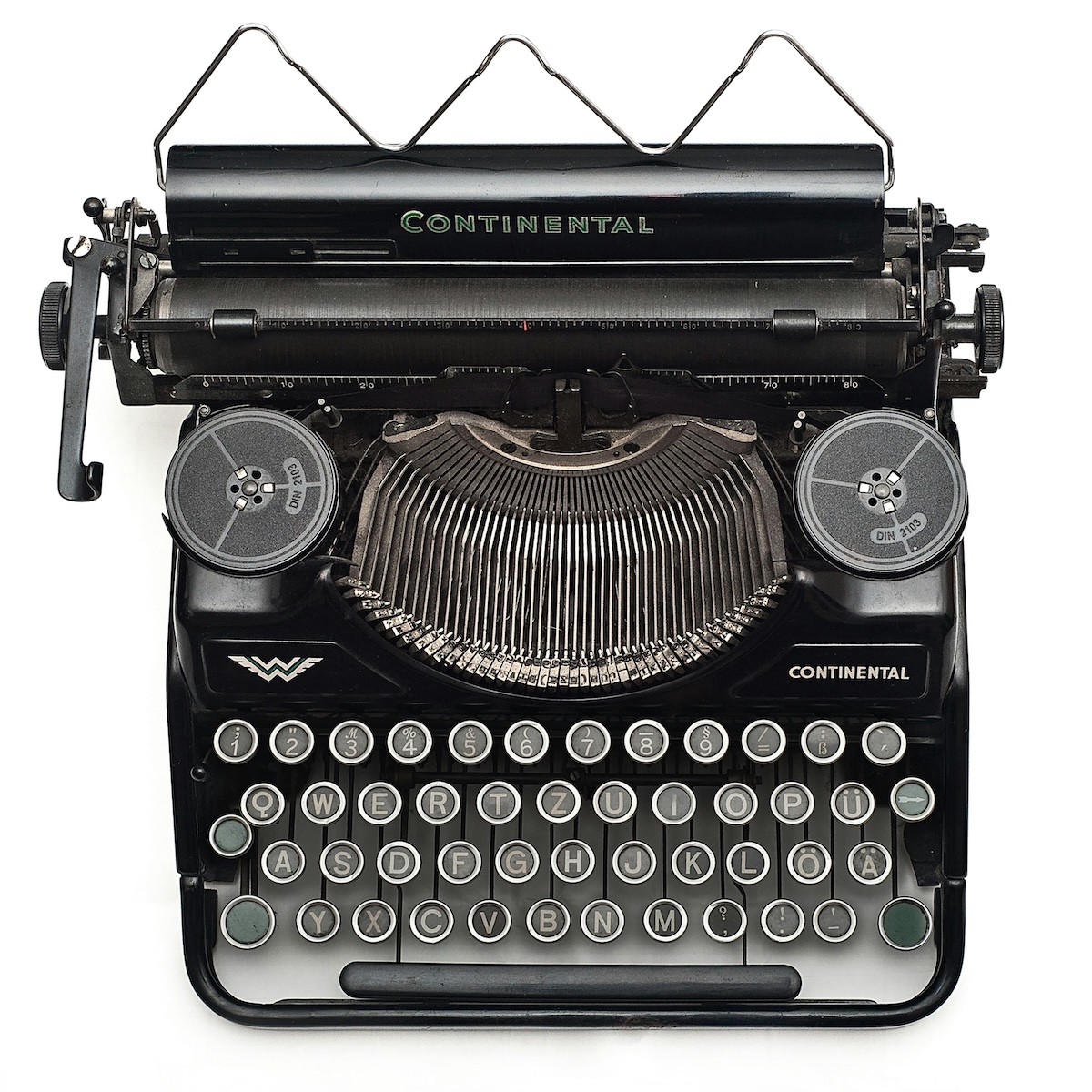
The typewriter revolutionized the process and speed of written communication. Pellegrino Turri is often credited as one of the first inventors of the typewriter. In 1844, Turri was inspired to begin his work in order to assist his lover, the blind Italian countess Carolina Fantoni da Fivizzano, to write him letters.
Turri worked with Agostino Fantoni, Carolina’s brother, to create the cembalo scrivano (which translates literally to “writing harpsichord”). This was the first functional typewriter.
To make the machine work, Turri also invented carbon paper, which is sheet paper with a dark coating on one side, used to make copies of what is written or typed on top of it. With the cembalo scrivano, Carolina was able to communicate with Turi by typing letters.
Evolution and adoption: After its commercial introduction in 1874, the typewriter quickly moved from novelty to necessity:
- By the mid-1880s, offices everywhere were adopting the typewriter as standard equipment.
- The typewriter held its title as an indispensable tool for business correspondence, professional writers, and students for ~100 years.
- In the 1980s, personal computers began to replace typewriters. But computers wouldn’t exist in their current form without the keyboard.
2. Audiobooks: Inclusion sparked a listening revolution (1932)
Inventor: Robert Irwin
Human-centered design inspiration: Giving more people who are blind access to the joy of reading
Thanks to the invention of Braille in 1824, the written word was being unlocked for those unable to read print. In addition to being bulky and expensive, Braille can be difficult to learn and is slow to read. Braille also isn’t suitable for every person or every application.
An alternative solution came from a blind man named Robert Irwin, the executive director of the American Foundation for The Blind in 1932. Irwin wrote to the library of congress, asking if they would consider printing books for the blind on phonograph records. With that, the first audiobooks were born.
These recordings rapidly gained popularity among people with and without disabilities who wanted to enjoy books without physically reading them.
Evolution and adoption: Today, the global audiobooks market is valued at USD $10.88 billion in 2025. It’s predicted to reach USD $56.09 billion by 2032.
“Never for one moment can I think of it as a machine; how possessively I refer to it, but honestly, I cannot visualize being without it, it has become such a vital part of my daily living.”
– A blind woman after receiving her first audiobook in the 1930s

3. The teletypewriter (TTY): Making phone conversations more accessible (1964)
Inventor: Dr. Robert H. Weitbrecht
Human-centered design inspiration: Personal frustration with communication isolation
In 1964, a Deaf physicist named Dr. Robert H. Weitbrecht had an epiphany around teletype machines, which were effectively typewriters hooked up to telegraphy systems. Weitbrecht realized the machines could be adapted for telephone communication.
Teletype machines were designed for wired connections, not the standard telephone lines used by the general public. So, Weitbrecht and his colleagues, Dr. James Marsters and Andrew Saks, founded Applied Communications Corporation and developed the first acoustic coupler. This allowed teletype machines to connect to regular telephone lines so people who are Deaf and hard of hearing could communicate by sending text messages over the phone.
Evolution and adoption: The acoustic coupler eventually allowed people to connect their computers to the telephone. This paved the way for early dial-up bulletin board systems, and eventually, the wide-spread adoption of the internet.
“I depended on hearing family members, friends, and neighbors to make telephone calls for me. Receiving the TTY was the dawn of my independence.”
– Colton Jannusch
TTYs: A Deaf Perspective TTY Nostalgia
4. Autocorrect: One man’s typos launched a global fix (1966)
Inventor: Warren Teitelman
Human-centered design inspiration: Late nights led to embarrassing typos
Warren Teitelman’s long nights in the MIT computer lab led to typos in his work. He decided the computer should automatically fix these errors for him. In 1966, he created a system called DWIM (Do What I Meant), and he further refined it at Xerox in 1972. The DWIM system autocorrected his frequently made typos based on context.
Teitelman’s initial system wasn’t universally helpful. He designed it based on his own mistakes, so it only worked well for him. When another programmer used DWIM, it falsely autocorrected a typo and deleted all the files from his computer. The angry programmer complained that DWIM should instead stand for “Damn Warren’s Infernal Machine!”
Evolution and adoption: Teitelman’s innovative idea eventually led to the autocorrect feature that is used widely on smartphones today.

5. Text-to-speech: Pushing the boundaries on independence (1970)
Inventors: James Bliss, Jonathan Allen, and Dennis Klatt
Human-centered design inspiration: Working with people who were blind or had low vision
In 1970, James Bliss founded Telesensory Systems Inc., pioneering technology for people who are blind or have low vision. Partnering with Professors Jonathan Allen and Dennis Klatt, he developed Speech Plus Prose 2000 — the first real-time, unlimited-vocabulary text-to-speech system.
This invention helped more than just people who are blind. If you’ve ever heard Steven Hawking’s voice, you’ve heard Professor Klatt’s creation. In fact, Klatt modeled that voice after a younger version of himself.
Evolution and adoption: Today, text to speech benefits anyone who can’t read for any reason, including disability or situations where the eyes are needed for another task, like driving.
6. The Kurzweil Reading Machine: Unlocking equal access with tech (1975)
Inventor: Ray Kurzweil
Human-centered design inspiration: Realizing written material was “locked away” from people who couldn’t see or process printed text
Ray Kurzweil, a well-known futurist, inventor, author, and AI scientist, recognized that written material was a barrier for people who are blind. Instead of inventing a new solution, he wanted to combine existing technologies into a format that worked. In 1975, he founded Kurzweil Computer Products and created the Kurzweil Reading Machine.
Combining optical character recognition (OCR), text-to-speech and scanner technology, Ray created the first machine capable of converting written text into speech. This enabled blind people to access printed materials completely independently.
Evolution and adoption: Ray went on to create Kurzweil Educational Systems, a software company that helps people who are blind, dyslexic, or experience other cognitive challenges to access education in new ways.
“I have realized that there is a fortuitous match between the capabilities of computers and the needs of people with disabilities. The restricted intelligence of the machine works well with the flexible and broad intelligence of the person.”
Ray Kurzweil
Computer scientist, author, entrepreneur, futurist, and inventor
“I have realized that there is a fortuitous match between the capabilities of computers and the needs of people with disabilities. The restricted intelligence of the machine works well with the flexible and broad intelligence of the person.”
Ray Kurzweil
Computer scientist, author, entrepreneur, futurist, and inventor
7. The Clapper: Accessibility applauded by the masses (1984)
Inventors: Carlile R. Stevens and Dale E. Reamer
Human-centered design inspiration: Giving control back to those with physical limitations
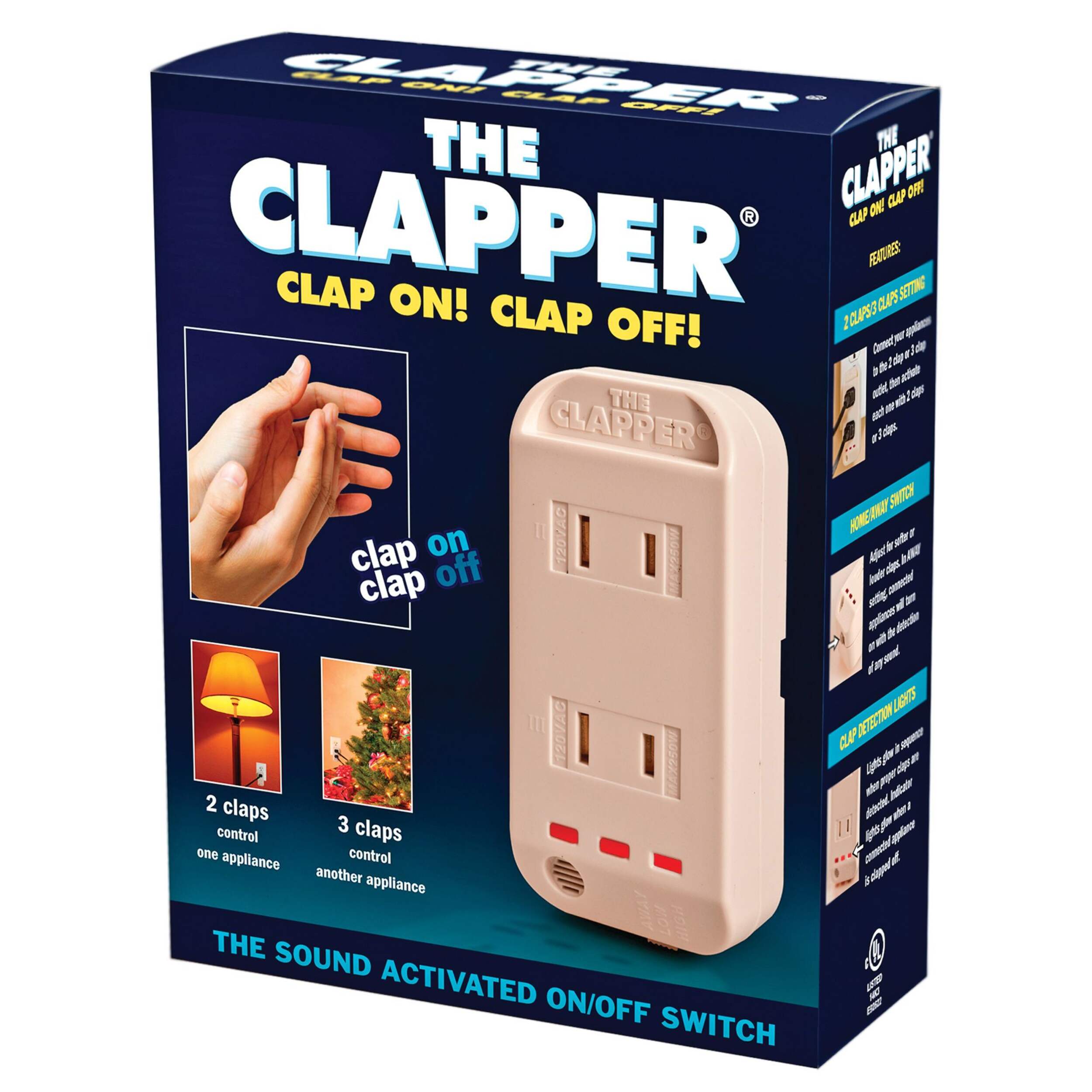
Perhaps the ultimate example of the popular appeal of products designed for accessibility is The Clapper, the first widely used smart home device. Invented by Carlile R. Stevens and Dale E. Reamer, The Clapper was an affordable way for those with physical limitations to control lights, fans, and other home appliances just by clapping their hands.
The invention was popularized by visionary salesman Joseph Pedott, (also famous for creating Chia Pets). Pedott recognized that home automation wasn’t only about accessibility – everyone wants cool gadgets to make their lives just a little easier.
Evolution and mass adoption: Pedott turned an accessible switch into a cultural icon and took the first steps down the road towards today’s mass-market for home automation. Reports indicate that over 7 million units of The Clapper have been sold globally, and the device is still available for purchase today.
8. Online shopping: Removing barriers reshaped retail (1984)
Inventor: Michael Aldrich
Human-centered design inspiration: Supporting those who find in-store shopping difficult
In 1984, Michael Aldrich introduced electronic shopping at Tesco to help people with disabilities who found in-store shopping difficult. The first online shopper was a 72-year-old named Jane Snowball from Gateshead, England. Using her TV remote and a Videotex system, she ordered margarine, cornflakes, and eggs. That might sound like your average grocery run today, but back then it was revolutionary.
Online shopping was built on the foundation of other accessibility innovations that came before it. Modems (thanks to the TTY) and keyboards (thanks to the typewriter), plus the ability to bring technology into the home, all paved the way for an entirely new and vastly more accessible way of doing business.
Evolution and mass adoption: Online shopping has become a convenience relied on by the masses. Global ecommerce sales are forecast to hit $6.4 trillion worldwide in 2025 and grow to $7.89 trillion by 2028. None of this would be possible without innovations stemming from accessibility, directly solving the needs of people with disabilities.

9. GPS: Military precision meets human possibility (1995)
Inventors: United States Department of Defence (GPS), Jack M. Loomis et al (USCB Personal Guidance System)
Human-centered design inspiration: Helping blind people better navigate the world
The first GPS satellite was launched by the US Department of Defence in 1978 and was originally intended for military purposes. As with so many other technologies, people with disabilities would find another use for GPS, changing the world by adapting it to their needs.
The idea that GPS could be used to help blind people better navigate the world would first be independently proposed in 1985 by both C.C. Collins and Jack M. Loomis. However, it wasn’t until 1995 that a GPS system allowing civilian access would be deployed fully enough to make the idea practical.
- The first GPS system for the blind was The UCSB Personal Guidance System (UCSB PGS), though the system remained a research prototype and was never commercialized.
- Shortly thereafter, Braille Note GPS became one of the first accessible GPS systems on the market.
Evolution and mass adoption: Originally designed to guide satellites and assist the blind, GPS now guides the world. It’s hard to imagine modern life without it. But without other accessibility innovations, like text-to-speech and touch screen, in-car GPS would never have gone mainstream.
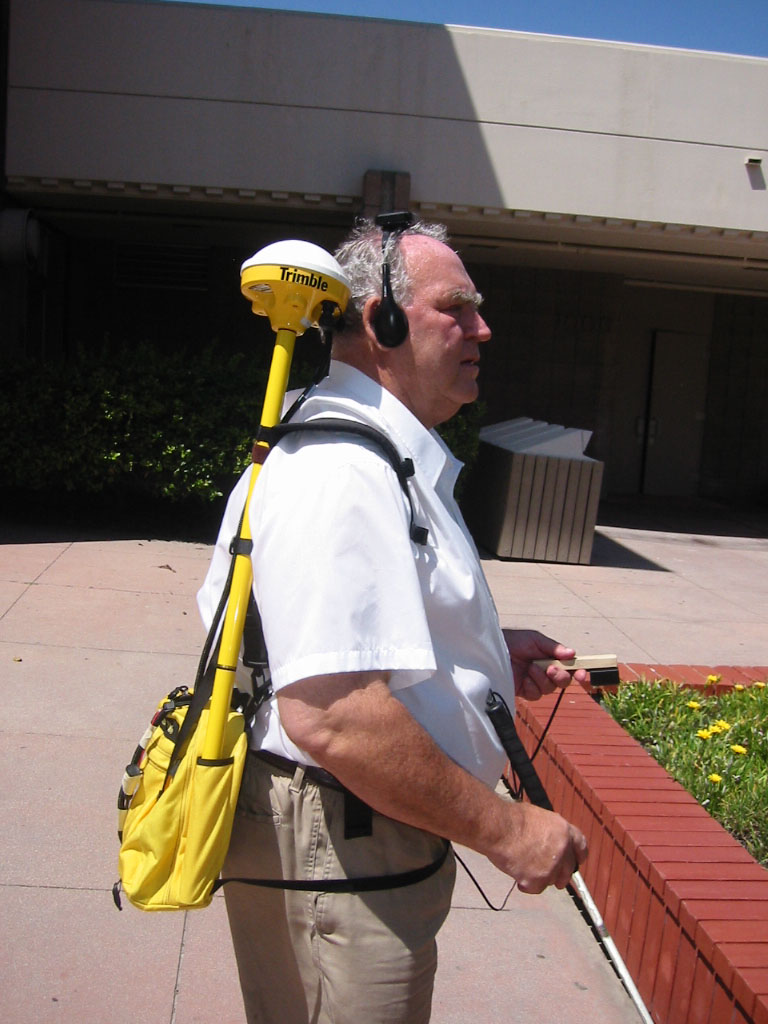
Source: UCSB Personal Guidance System
10. The touch screen: Low-impact navigation led to high-impact adoption (1999)
Inventors: John Elias and Wayne Westerman
Human-centered design inspiration: Helping people with repetitive stress injuries
In 1999, John Elias and Wayne Westerman founded a company called FingerWorks. They were creating a product based on research performed at the University of Delaware to help people who acquired repetitive stress injuries:
- FingerWorks released the iGesture Pad, a one-hand touchpad that connected to a computer like a mouse.
- It supported gestures like pinch-to-zoom, two-finger rotate, and multi-finger swipe and scroll.
- This low-impact navigation tool was helpful for people with repetitive stress injuries or disabilities.
Another now-infamous company had a vision for how this new creation could help more than just those with accessibility needs. To create the iPhone, Apple acquired FingerWorks.
Evolution and mass adoption: The expertise and intellectual property of Elias and Westerman became the key piece in the iPhone’s revolutionary new interface. Today, touchscreens can be found on all types of devices, from smartphones and tablets to in-car displays, public kiosks, and point-of-sale terminals.
From accessibility roots to modern UX design
While the ten products highlighted above run a wide functionality spectrum, each of them follows the same human-centered arc:
- 1Start with user empathy
- 2Ideate and prototype
- 3Test with real users
- 4Iterate on feedback
This approach mirrors many modern UX design principles that guide today’s best research and product teams to practice continuous improvement.
| UX design principles | Key qualities of early accessibility innovation |
|---|---|
| Empathy | Designed to solve real human barriers and lived challenges |
| Clarity | Simplified complex interactions so anyone could use them |
| Consistency | Established familiar, repeatable patterns that built trust |
| Usability | Iterated testing feedback to make technology intuitive |
| Inclusion | Designed for the margins and improved life for everyone |
Accessibility as a model for long-term innovation
Today’s UX research and product leaders can look to accessibility as a blueprint for sustainable, human-centered design innovation. It’s a participatory approach that brings in user input early and often to create the most usable products. And it doesn’t just remove friction – it can also spark joy, strengthening customers relationships and business results.
The products highlighted above show what’s possible when the needs of people with disabilities are baked in from the start:
Accessible design drives adoption because teams begin by deeply understanding the needs and desires of people with disabilities, not the mythical “average user.” By including diverse perspectives from the beginning, they create systems that work better for everyone.
The future of product success is human-centered
Human-centered design is a timeless practice. It starts with deeply understanding user needs and barriers in the real world and committing to a loop of learning and improvement.
Getting usability feedback from people with disabilities is a small but transformative change you can introduce now to improve product usability for the masses in the future.